
In the world of custom packaging, few things communicate quality quite like a well-crafted gift box. From the moment a customer holds your product, the box’s weight, texture, and construction speak volumes about your brand’s commitment to excellence. In this comprehensive guide, we take you through the art and science of gift box manufacturing — from structural design and material selection to the advanced finishing techniques that turn a simple container into a luxury brand experience.
Understanding Gift Box Structures
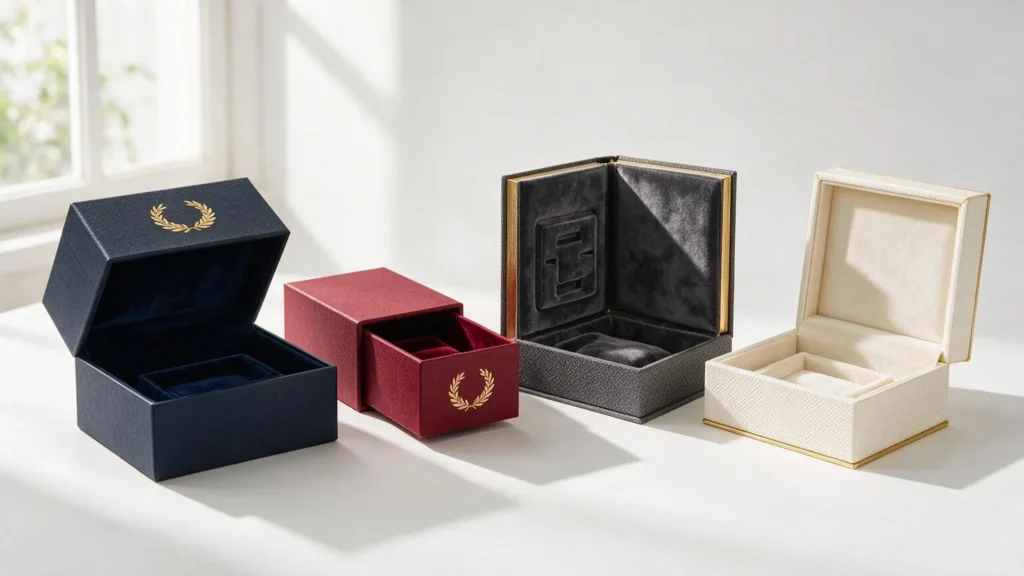
Before diving into manufacturing, it’s important to understand the primary structural types that define luxury packaging. Each serves a different purpose and presents unique manufacturing requirements.
Rigid Gift Boxes (Set-Up Boxes)
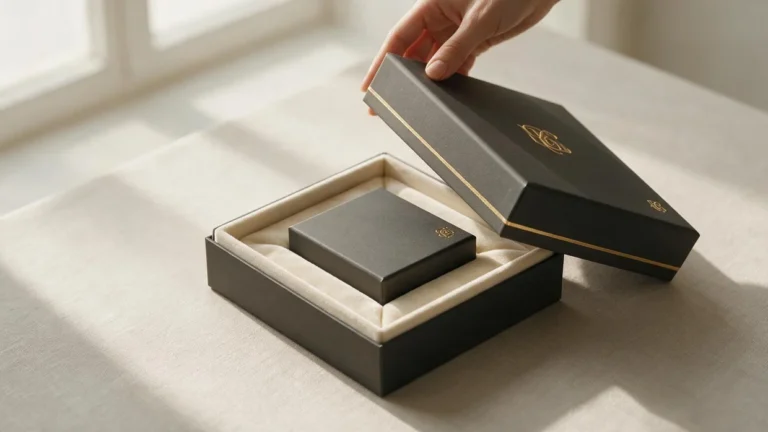
Rigid boxes are the gold standard of premium packaging. Unlike folding cartons that ship flat, rigid boxes are pre-assembled and permanently maintain their shape. Constructed from high-density chipboard (typically 1.5mm to 3mm thick), they offer superior structural integrity and a substantial feel that consumers instinctively associate with luxury. Common applications include jewelry boxes, electronics packaging, premium spirits, and high-end cosmetic sets.
Magnetic Closure Boxes
A modern evolution of the classic rigid box, magnetic closure boxes embed neodymium magnets into the lid and base to create a satisfying snap-close action. The precision required — magnet alignment within 0.5mm tolerance — demands expert craftsmanship. These boxes have become the preferred choice for premium gift sets and subscription boxes, where the unboxing experience is an integral part of brand interaction.
Drawer-Style Gift Boxes
Also known as sleeve-and-tray boxes, this design features an inner tray that slides smoothly within an outer sleeve. The sliding mechanism requires meticulous attention to dimensional tolerance — too tight and the drawer sticks, too loose and it feels cheap. These boxes excel for products that benefit from a reveal, such as watches, pens, and fine jewelry.
Book-Style Boxes
Inspired by the look and feel of a hardcover book, book-style boxes open along one hinged edge to reveal the product within. They are particularly popular for photo albums, luxury chocolate collections, and commemorative gift sets, offering an elegant, narrative-driven opening experience.
Hinged Lid Boxes
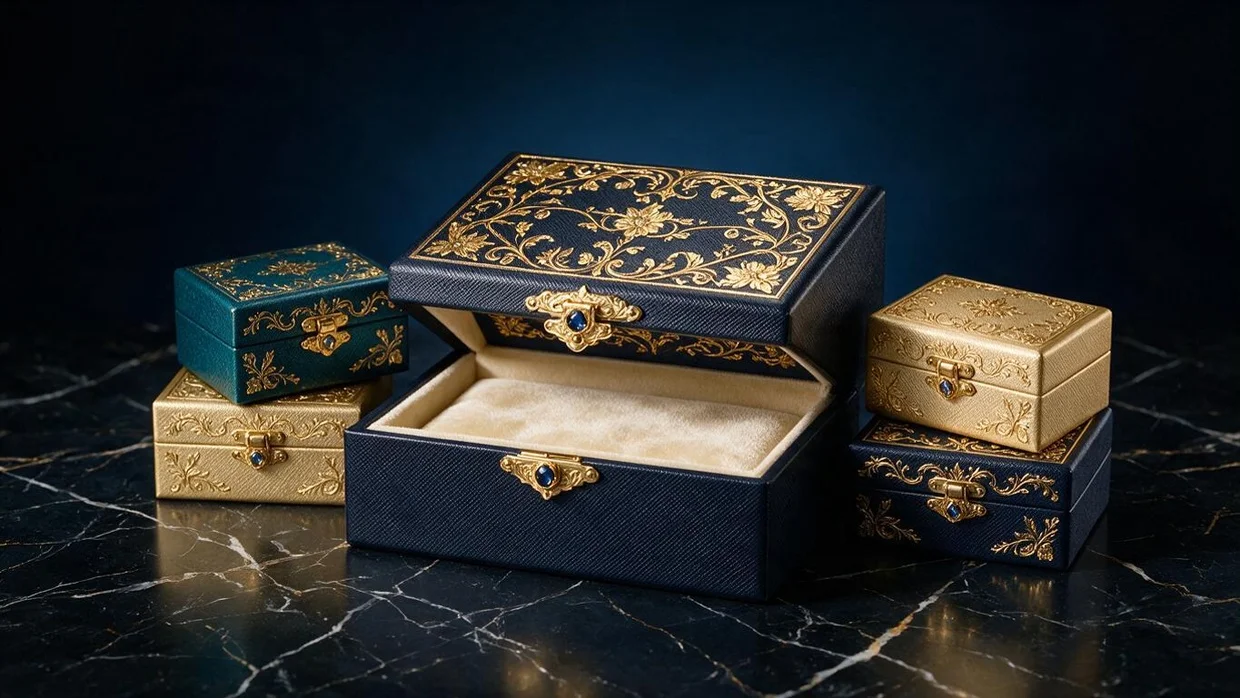
A timeless design where the lid remains attached to the base via a fabric or paper hinge. The hinge construction is critical — it must withstand thousands of openings without tearing or weakening. High-end hinged boxes use reinforced fabric hinges bonded with acid-free adhesives for long-term durability.
Material Selection for Gift Box Manufacturing
The foundation of any great gift box lies in its materials. The choice of board, covering material, and lining directly impacts both aesthetics and functionality.
Chipboard (Grey Board)
The most common core material for rigid boxes, grey chipboard is made from recycled paper fibers compressed into dense, rigid sheets ranging from 1.0mm to 3.5mm in thickness. Premium-grade chipboard offers consistent density, smooth cut edges, and minimal warping — all essential for precision box manufacturing.
Covering Materials
The outer surface of a gift box is typically wrapped in:
Art Paper / Specialty Paper — The most widely used covering, available in countless textures, colors, and finishes from natural matte uncoated to high-gloss coated.
Leather and Faux Leather — Genuine leather conveys the ultimate sense of luxury, while high-quality PU leather offers excellent durability and consistent texture at a more accessible price point.
Cloth / Fabric — Options include silk, velvet, linen, cotton, and microfiber, each offering unique tactile qualities that paper cannot replicate.
Rigid Plastic / Acrylic — For transparent or translucent effects, offering a modern, minimalist aesthetic popular in tech and cosmetics packaging.
Lining Materials
The interior lining cradles the product and creates the first tactile impression: velvet and suede for jewelry and delicate items; satin and silk for cosmetics; foam padding for electronics and fragile goods; and EVA foam for precision-cut product cavities.
Core Manufacturing Process
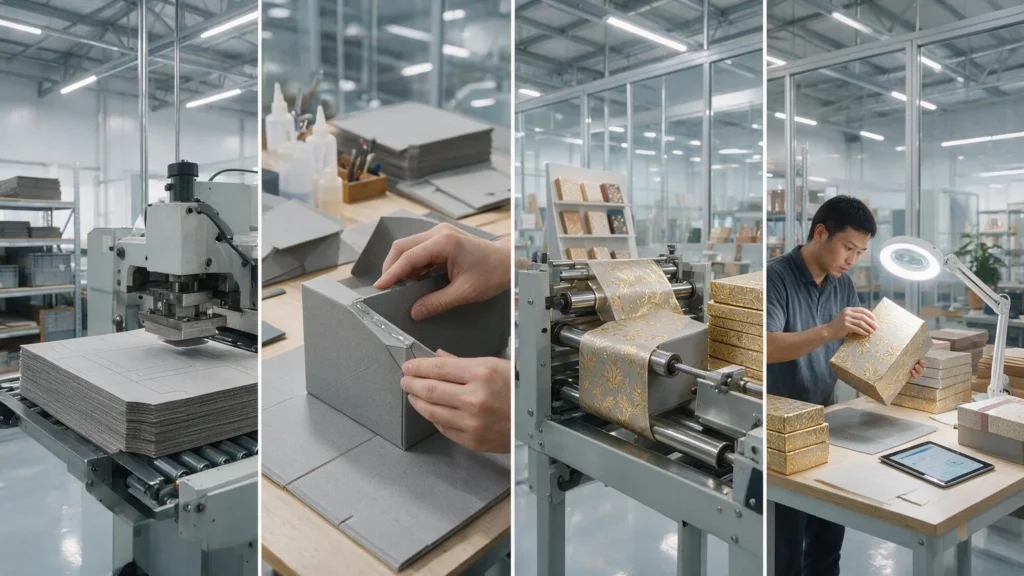
Step 1 — Board Cutting and Beveling
Precision die-cutting machines cut chipboard panels to exact dimensions with tolerances of ±0.2mm. For premium boxes, specialized beveling machines cut edges at a 45-degree angle, creating the smooth, elegant corners that distinguish luxury rigid boxes.
Step 2 — Corner Pasting and Assembly
Cut boards are assembled using high-strength adhesives. Corners are carefully folded and glued — a process requiring skilled hand craftsmanship to achieve perfect miters without wrinkles or gaps.
Step 3 — Wrapping and Laminating
The covering material is applied to the board with industrial-grade adhesives. Precise alignment is critical — even a 1mm misalignment on a patterned design can render a box unusable.
Step 4 — Lining Insertion
Interior linings — including foam inserts, velvet pads, or custom trays — are bonded inside the box, often creating precision-cut cavities that hold products securely.
Step 5 — Hardware Installation
Magnetic closures, hinges, clasps, and ribbon pulls are installed. Magnet pockets are routed into the board before wrapping so magnets sit flush beneath the surface.
Advanced Finishing Techniques
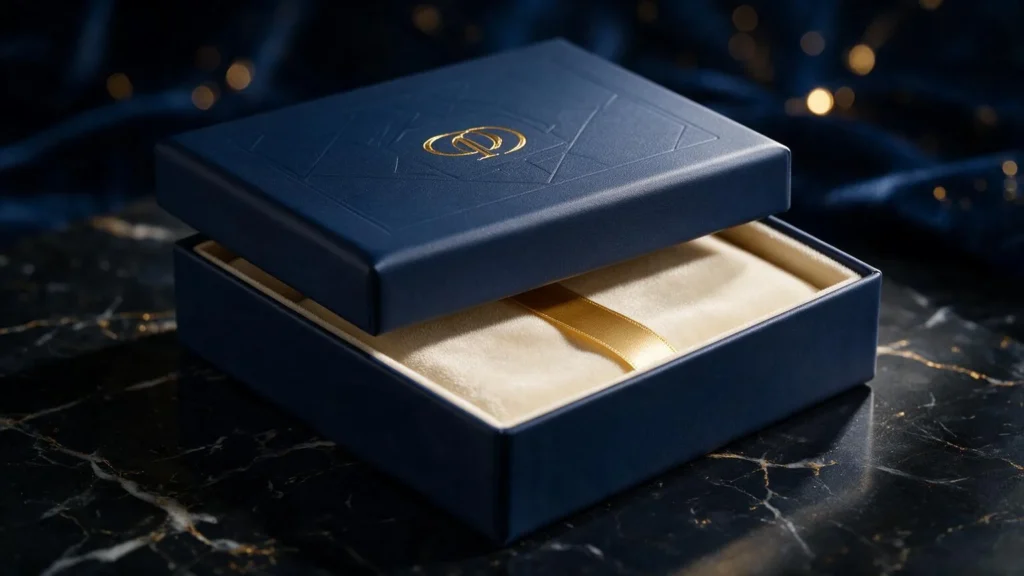
It is the finishing touches that elevate a gift box from functional packaging to a true brand statement.
Hot Foil Stamping
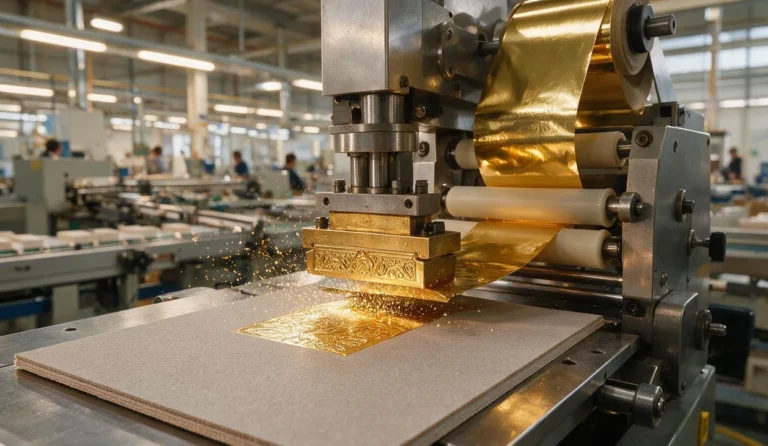
Using heat, pressure, and a custom metal die to transfer metallic foil onto the box surface. Gold, silver, bronze, and holographic foils are popular choices for logos and decorative accents on lid tops and spines.
Embossing and Debossing
Embossing raises a design above the surface; debossing presses it in. Both create tactile dimension that engages the sense of touch — a powerful emotional trigger in luxury packaging. Blind embossing (without foil or ink) offers a subtle, sophisticated effect.
Soft-Touch Lamination
A matte laminate that creates a velvety, suede-like feel. When combined with high-gloss foil stamping or spot UV, the contrast between matte and glossy surfaces produces an exceptionally refined aesthetic.
Spot UV Coating
Applies a glossy, raised varnish to specific design elements (logos, brand names, patterns) while leaving the rest matte. The resulting contrast adds visual depth and directs attention to key brand elements.
Matte Processing
A full matte finish creates a smooth, non-reflective surface that exudes modern sophistication, ideal for minimalist and contemporary brand aesthetics.
Ribbons and Closures
Custom satin ribbons, grosgrain bands, elastic cords, and branded magnetic clasps add the final touch, reinforcing brand identity at the moment of unboxing.
Quality Control in Gift Box Manufacturing
At FANCY Packaging, every box undergoes rigorous inspection: dimensional accuracy within ±0.5mm tolerance; adhesive integrity testing on all bonded surfaces; visual inspection under controlled lighting for scratches, bubbles, and color variations; functional testing of magnetic snap strength, drawer smoothness, and hinge durability; and spectrophotometric color matching for batch-to-batch consistency.
Why FANCY Packaging for Your Custom Gift Boxes?
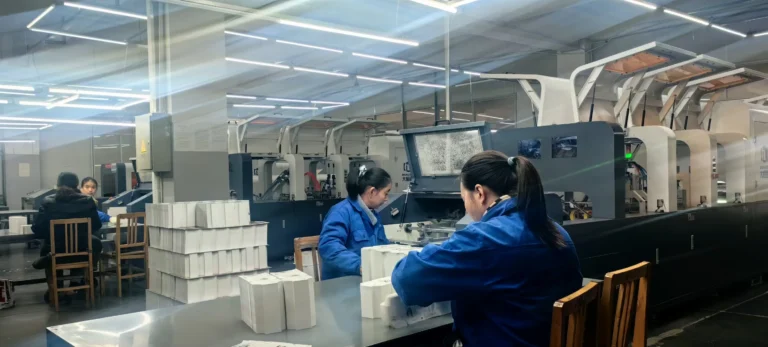
With over 20 years of experience in luxury packaging, Hangzhou FANCY Packaging has developed unmatched mastery of gift box manufacturing. Our 10,000-square-meter facility houses advanced Heidelberg printing presses, precision die-cutting machines, automated laminating lines, and a skilled workforce of experienced craftsmen.
We offer end-to-end service — from structural design consultation and material sourcing to full-scale production and quality assurance. Whether you need 500 boxes for a limited edition or 50,000 units for a global retail rollout, we deliver consistent, museum-quality results — on time, on budget, and on brand.
Ready to Create Your Custom Gift Boxes?
Contact FANCY Packaging today to discuss your project. Our team will guide you through every decision — from box structure and material selection to finishing techniques and hardware options — creating packaging that not only protects your product but elevates your entire brand experience.