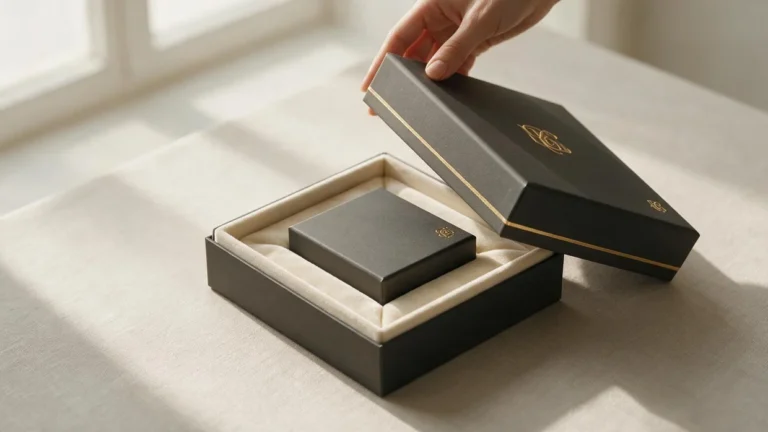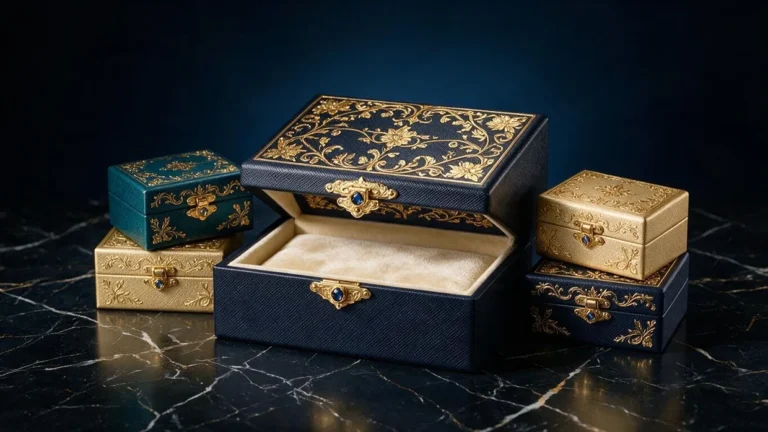

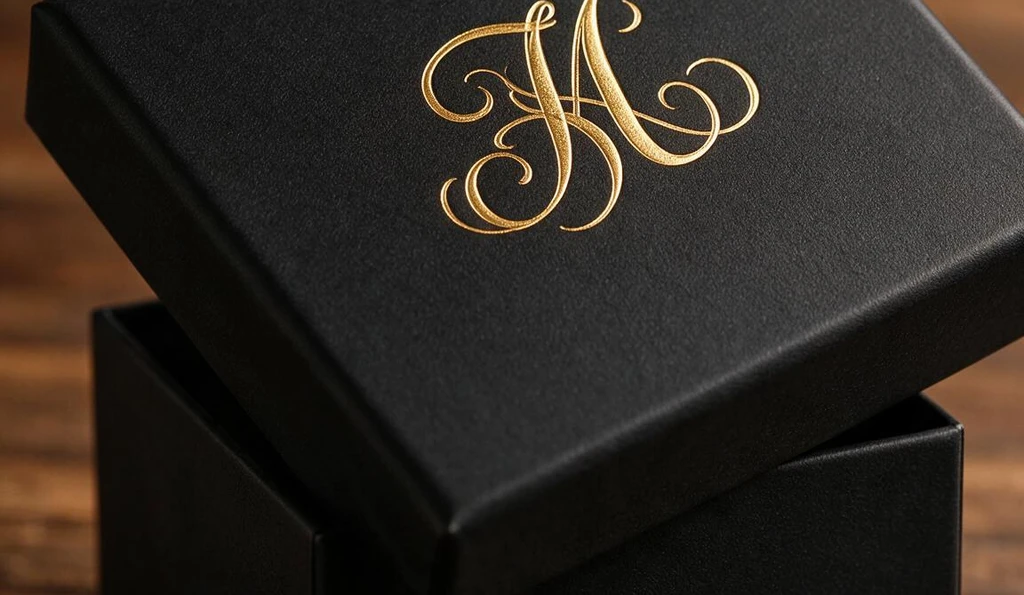
In the world of luxury packaging, few finishing techniques command attention quite like hot foil stamping. From the subtle shimmer of a brand logo on a rigid gift box to the bold statement of metallic accents on a cosmetic package, foil stamping transforms ordinary packaging into an extraordinary brand experience.
What Is Hot Foil Stamping?
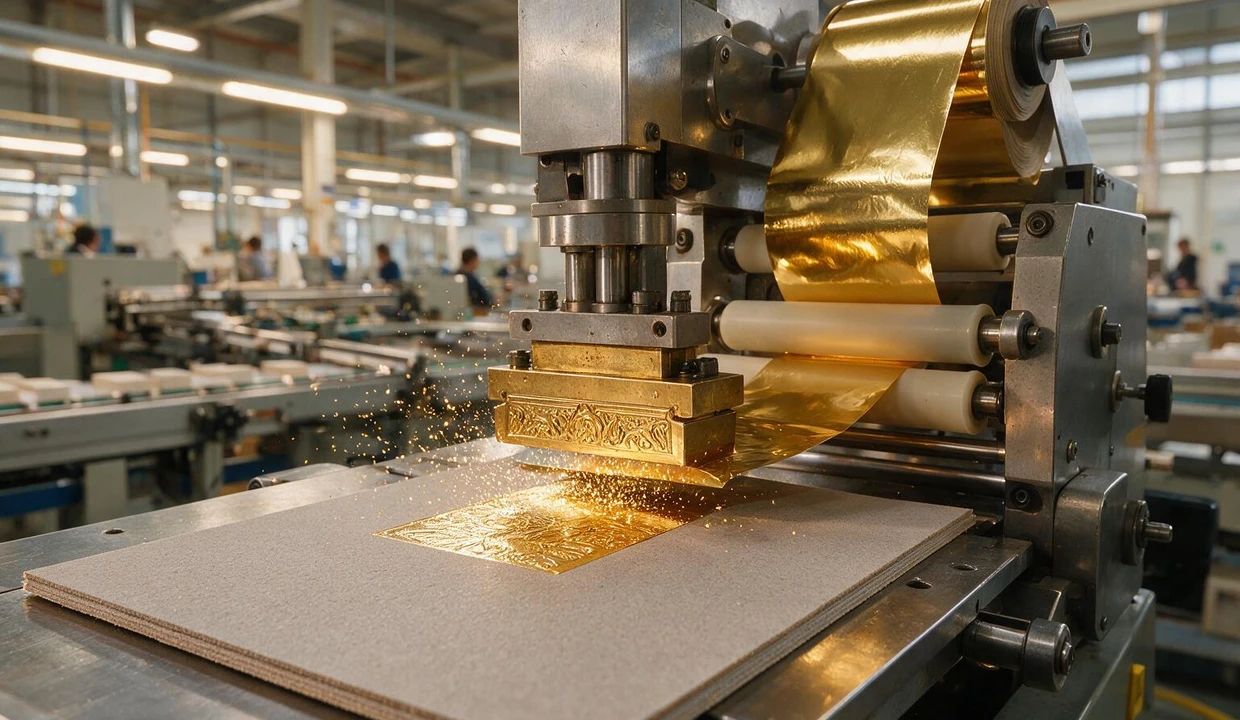
Hot foil stamping is a premium printing technique that uses heat, pressure, and a custom metal die to transfer a thin layer of metallic or pigmented foil onto a substrate — typically paperboard, cardstock, or rigid box surfaces. Unlike conventional ink printing, foil stamping creates a reflective, tactile finish that immediately communicates quality and sophistication.
The result is more than just a shiny logo. It’s a sensory experience that adds depth, texture, and perceived value to your packaging — a critical advantage in today’s competitive retail environment.
How the Foil Stamping Process Works
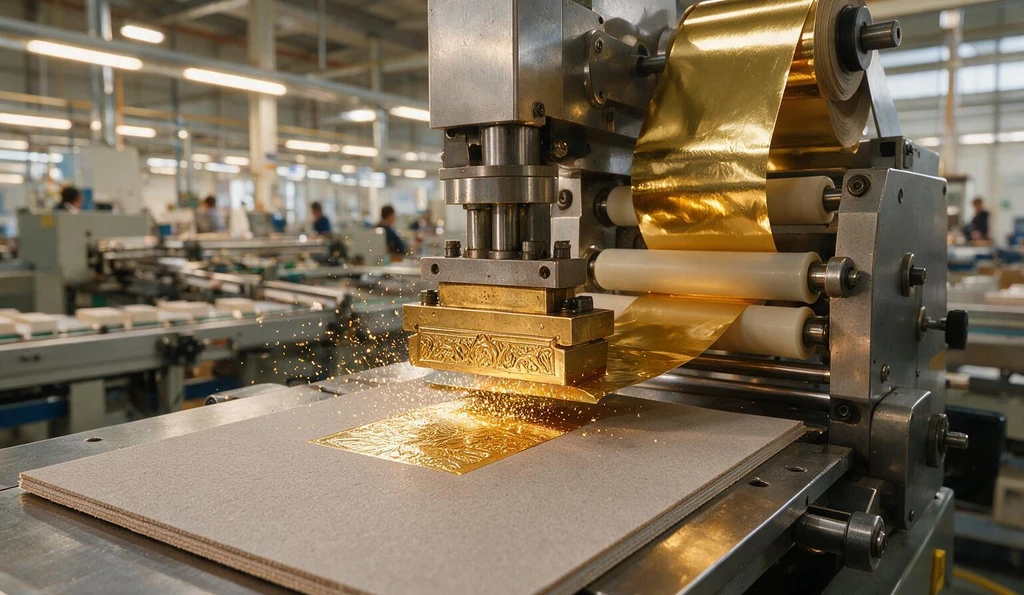
The hot foil stamping process involves three precise stages, each requiring expert craftsmanship and state-of-the-art equipment:
Step 1 — Custom Die Creation
Your design — typically a logo, brand name, or decorative graphic — is first converted into a custom-engraved metal die. Depending on the level of detail and production volume, dies are made from:
- Brass — For long production runs requiring exceptional durability
- Copper — Offering excellent heat transfer for mid-range volumes
- Magnesium — Ideal for short runs, proofing, and prototypes
Step 2 — Heat and Pressure Transfer
The die is heated to a precisely controlled temperature (typically 100–180°C depending on the foil type). The foil roll, consisting of a polyester carrier film, release layer, metallic layer, and heat-activated adhesive, is positioned between the heated die and the packaging material. With carefully calibrated pressure, the die presses the foil onto the substrate, instantly bonding the metallic layer to the surface.
Step 3 — Quality Control and Finishing
After stamping, each piece is inspected for sharpness, alignment, and consistent coverage. A perfect foil stamp should be crisp, smooth, and evenly transferred — no gaps, no ghosting, no excess foil. Optional post-processes such as embossing, debossing, or lamination can be combined for an enhanced tactile effect.
Types of Foil Stamping
| Type | Best For | Key Advantage |
|---|---|---|
| Flat Foil Stamping | Most rigid boxes, logos, text | Excellent accuracy; most widely used |
| Sculpted Foil Stamping | Premium logos, high-value branding | 3D raised effect adds dimension and luxury |
| Peripheral Foil Stamping | Curved edges, circular containers | Applies foil around full circumference |
| Rotary Stamping | High-volume production, folding cartons | Fastest speed for large runs |
Foil Finishes: Choosing the Right Look
| Foil Finish | Visual Impact | Ideal Application |
|---|---|---|
| Metallic Gold / Silver | High-end, classic luxury | Cosmetics, jewelry, spirits, premium gifts |
| Matte Foil | Modern, understated elegance | Minimalist brands, tech packaging |
| Holographic Foil | Vibrant, attention-grabbing | Limited editions, youth-oriented products |
| Pigment Foil | Crisp solid colors, no metallic | Logos, text clarity on colored surfaces |
| Pearlescent Foil | Soft shimmer, gentle luxury | Skincare, bridal, high-end gift sets |
Why Choose Foil Stamping for Your Packaging?
Superior Visual Impact
No ink can replicate the reflective brilliance of foil. A well-placed foil stamp catches light from every angle, drawing the eye and commanding attention on crowded retail shelves.
Enhanced Perceived Value
Studies consistently show that metallic finishes trigger an association with premium quality. Customers perceive foil-stamped products as more valuable — and are willing to pay accordingly.
Exceptional Durability
Unlike printed ink that may fade, scuff, or rub off over time, hot foil is permanently bonded to the substrate. It resists wear, oxidation, and color fading, ensuring your branding stays brilliant throughout the product’s lifecycle.
Versatility Across Industries
From cosmetics and jewelry to spirits, electronics, and luxury gifts, foil stamping adapts to virtually any premium packaging application. It pairs beautifully with other finishes such as soft-touch lamination, embossing, and spot UV for a truly multi-sensory unboxing experience.
Design Considerations for Foil Stamping
- Keep lines bold — Minimum stroke width of 0.3mm for metallic foils
- Avoid overly large coverage — Large foil blocks may transfer unevenly on textured papers
- Use vector artwork — Submit designs in high-resolution PDF or AI format with foil layers clearly marked
- Test real samples — Paper type, absorbency, and surface texture all affect foil adhesion
- Combine strategically — Foil pairs exceptionally well with embossing and matte lamination for contrast
The FANCY Packaging Advantage
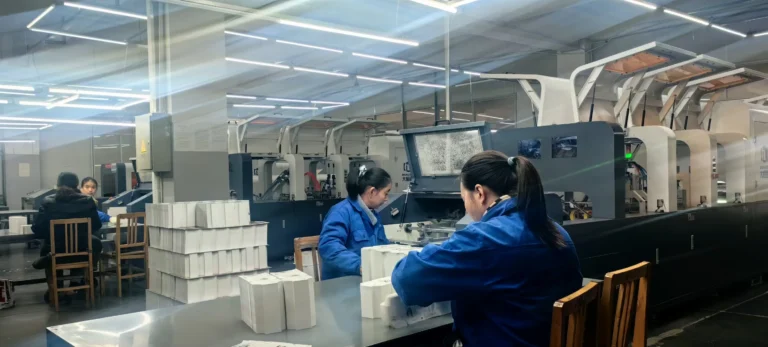
At Hangzhou FANCY Packaging, we have been perfecting the art of hot foil stamping for over 20 years. Our state-of-the-art production facilities are equipped with advanced Heidelberg printing machinery and precision foil stamping presses, staffed by experienced craftsmen who understand the subtle interplay of heat, pressure, timing, and materials that defines exceptional foil work.
Whether you need a single striking logo in gold, a multi-layered design combining foil with embossing, or a full-range packaging line with consistent foil application across multiple SKUs, we deliver results that exceed expectations — on time, on budget, and on brand.
Ready to Elevate Your Packaging?
Contact us today to discuss your custom packaging project. Our team will guide you through material selection, die creation, and foil finish choices to create packaging that makes an unforgettable impression.